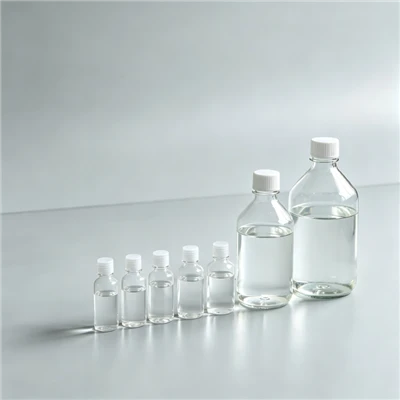
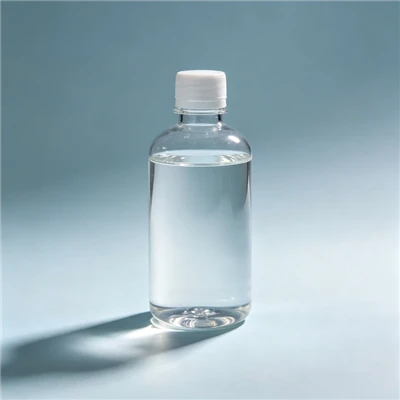
Shanghai Dingwujin Chemical Co., Ltd. is a reliable supplier of propylene carbonate in China. We cooperate with qualified Chinese factories and focus on chemical distribution to Central Europe, Eastern Europe and Ukraine. We welcome inquiries for wholesale and custom-spec propylene carbonate manufactured in China.
Propylene Carbonaten Introduction
Characteristics
| Molar Weight | 102.09 g/mol |
| Melting Point | -48.8°C |
| Density | 1.206 g/cm³ |
| Forms | Colorless viscous liquid. |
Our Product Grades
Reagent Grade
Covers three specifications: Guaranteed Reagent (GR), Analytical Reagent (AR), and Chemically Pure (CP), with a conventional purity reaching 99%, meeting the requirements of laboratory analysis and research preparation.
Industrial Grade
Divided into three tiers: special grade, first grade, and qualified products, available in various purity specifications to suit different industrial production scenarios including battery electrolyte, petrochemical, and pharmaceutical manufacturing.
Battery Grade
Equipped with battery-grade specifications, specifically designed for lithium-ion battery electrolyte applications, with strict control over moisture content (≤20 ppm) and metal ion impurities to meet battery performance standards and regulatory requirements such as UL and IEC certifications.
Standard stock items are industrial grade. For special-grade orders, please contact us for full documentation.
Uses and applications
Key applications
- Lithium battery electrolyte solvent
- Gas purification
- Pharmaceutical intermediate
- Polymerization modifie
- Resin and coating solvent
- Adhesive solvent
- Plasticizer and dispersant
- Chemical synthesis intermediate
Industries
Application of Propylene Carbonate in Lithium Battery/Energy:
Propylene carbonate is one of the most important polar aprotic solvents used in lithium-ion battery electrolytes. Its high dielectric constant (ε ≈ 64 at 25°C) enables excellent dissolution of lithium salts such as LiPF₆, while its wide electrochemical stability window (up to 4.5 V vs. Li/Li⁺) ensures stable operation in high-voltage battery systems. Propylene carbonate forms a stable solid electrolyte interphase (SEI) on the graphite anode, preventing co-intercalation and ensuring long-term cycling stability. It is widely used in consumer electronics, electric vehicles, and energy storage systems. Battery-grade propylene carbonate requires ultra-low moisture content (≤20 ppm) and metal ion impurities to meet IEC and UL safety standards.


Application of Propylene Carbonate in Petrochemical/Gas Processing:
Propylene carbonate is extensively used as a selective solvent in gas purification processes, particularly for the removal of acidic gases such as hydrogen sulfide (H₂S) and carbon dioxide (CO₂) from natural gas, synthesis gas, and refinery gas streams. The SEPAROL process, which uses propylene carbonate as the absorption medium, exploits its high solubility for H₂S and CO₂ at elevated pressures and low temperatures, followed by thermal regeneration of the solvent. This makes propylene carbonate highly effective for sweetening natural gas, producing hydrogen-rich streams for ammonia and methanol synthesis, and reducing CO₂ emissions in industrial gas treatment applications.
Application of Propylene Carbonate in Pharmaceuticals:
Propylene carbonate serves as a versatile solvent and intermediate in pharmaceutical manufacturing. Its excellent solvency for a wide range of organic and inorganic compounds makes it ideal for use as a reaction medium in the synthesis of various active pharmaceutical ingredients (APIs). It is also used as a penetration enhancer in topical drug delivery systems, improving the transdermal absorption of therapeutic agents. Additionally, propylene carbonate is employed in the production of carbamate-based pharmaceuticals and as a green solvent alternative to more toxic polar aprotic solvents such as dimethylformamide (DMF) and dichloromethane in pharmaceutical process chemistry.


Application of Propylene Carbonate in Polymer/Materials:
Propylene carbonate is widely used in the polymer and materials industry as a high-boiling-point solvent and reaction medium. It is employed in the synthesis of polyurethanes, acrylic resins, and polyester resins, where its polar aprotic nature facilitates polymerization reactions and improves molecular weight control. Propylene carbonate is also used as a plasticizer and dispersant in paint and coating formulations, enhancing gloss, adhesion, and flexibility. In fiber production, it serves as a spinning solvent for polyacrylonitrile (PAN) fibers and as a modifier in specialty polymer blends. Its low toxicity and biodegradability make it an environmentally favorable choice compared to traditional organic solvents.
Application of Propylene Carbonate in Chemical Synthesis:
Propylene carbonate is a valuable reagent and solvent in organic and inorganic chemical synthesis. It participates in carbonylation reactions to produce cyclic carbonates, urethanes, and oxazolidinones, which are important intermediates in the manufacture of agrochemicals, dyes, and specialty chemicals. As a green solvent, propylene carbonate is increasingly adopted in fine chemical synthesis to replace more hazardous alternatives, offering excellent solubility for polar substrates and reagents while being easily recoverable by distillation. It is also used in the production of antioxidants, stabilizers, and surface-active agents, contributing to the synthesis of high-value specialty chemicals.

FAQ
Q: How is propylene carbonate priced in China?
A: The price of MTBE in China fluctuates in line with market conditions, and orders are priced separately based on CAS purity grade, purchase quantity, and destination. Costs are primarily influenced by raw materials, energy, and payment terms. MTBE is produced via a MTBE by-product recovery process and shares the China Shandong industrial cluster with DMC. MTBE is our flagship product, and we can provide samples and large-volume shipments to Central and Eastern Europe, Ukraine, and other countries and regions worldwide. Inventory can be stored at our partner chemical warehouse in Poland. With self-sufficient raw material supply and a short production chain, MTBE offers a price advantage over imported products.
Q: Can I order samples and bulk quantities of propylene carbonate?
A: We accept both sample and bulk orders. Sample MOQ is flexible with multiple purity grades, each supplied with COA for R&D and pilot testing. Bulk orders start from metric ton quantities with volume based discounts. Custom packaging and full truck bulk transport are available. We recommend sample validation prior to bulk purchasing to mitigate supply chain risks. Note: hazard classification varies by purity; both hazardous and non hazardous chemicals require SDS & COA, while hazardous goods additionally need UN number, dangerous goods packaging certificate and dangerous goods declaration.
Q: What Compliance Requirements for Exporting Propylene Carbonate to EU and Ukraine?
A: Sales to the EU are subject to REACH regulation. Where the annual import volume is ≥ 1 tonne, registration must be completed via an EU-based Only Representative (OR); otherwise the substance cannot be placed on the market. Continuous monitoring of updates to the SVHC Candidate List and control of threshold values for restricted substances are required. The EU also enforces CLP classification, labelling and packaging rules, and SDS must follow the EU GHS format. It is recommended to work with a compliance institute to verify the CAS number and impurity profile and submit the dossier in advance to prevent port detention. Ukraine (UA REACH): Ukraine has implemented UA REACH chemical regulations aligned with EU REACH. For annual import ≥ 1 tonne, local chemical registration in Ukraine is required. Existing EU REACH data may be reused to simplify dossier preparation. UA CLP classification and labelling apply, and Ukrainian-language SDS is needed. Additional attention shall be paid to Ukraine customs clearance, tariffs, certificate of origin and special logistics & document requirements under wartime conditions. Propylene Carbonate is not classified as dangerous goods under IMDG and is not a marine pollutant. Nevertheless, a transport condition identification report is required for filing with freight forwarders and shipping lines. Section 14 of SDS clearly states it is non-hazardous goods.
Q: Can you provide SDS and COA documents for propylene carbonate?
A: Complete 16 section SDS and batch specific COA are available upon request. SDS covers physical chemical properties, hazard classification, first aid, fire fighting, spill handling and storage transport requirements for booking, customs clearance and destination country compliance. COA records batch level indicators including purity, water content and acidity for full traceability and comes with sample shipments. EU GHS formatted documents can be arranged with advance notice. To validate SDS authenticity, cross check CAS No., product name, GHS hazard statements and UN number; third party verification is recommended if needed.
Q: How do you deliver propylene carbonate to Central Eastern Europe and Ukraine and wordwide?
A: For bulk orders: goods are packed in 155 kg galvanized drums or ISO TANK containers and shipped from Chinese ports to hub ports including Gdańsk (Poland), Hamburg (Germany), Constanța (Romania), then cross border transported by licensed dangerous goods trucks to warehouses in western Ukraine. Full documentation including SDS, COA, dangerous goods packaging certificate and transport appraisal report will be provided for transit country customs clearance. For small batch / sample orders: dangerous goods air freight to Warsaw or Frankfurt, last mile handled by local hazardous goods logistics providers. For Ukraine shipments, we strongly recommend "Poland/Germany + cross border trucking" routing to avoid air space restrictions. Note: Class 3 flammable liquids require dangerous goods vessel space; acceptance rules vary by shipping line per UN number.
Q: Do you keep propylene carbonate stock in Poland?
A: Our partner hazardous goods warehouse in Poland holds regular inventory of industrial grade propylene carbonate. Urgent production orders can be dispatched within EU territory for shortened lead time. For large volume bulk orders, direct shipment from China is arranged to optimize total procurement cost.
Q: What are your typical lead times and production capacity?
A: Industrial grade PC samples are in stock and dispatched within several working days upon sample confirmation. For bulk orders, exact production & delivery timeline will be confirmed after receiving order quantity, packaging requirement and destination. Supported by Shandong chemical cluster supply chain, we maintain flexible scheduling for regular monthly orders and urgent replenishment requests. Submit your inquiry for confirmed lead time aligned with your project timeline; we will reply within 1 working day.
Q: What is your ordering process for propylene carbonate?
A: Three step workflow:
1.Submit your requirements including product grade, purity, quantity and delivery address;
2.Confirm comprehensive all in landed quotation;
3.Direct factory shipment. We take end to end responsibility for sourcing, quality inspection, regulatory compliance, customs clearance and final delivery, so you work with one single accountable supplier.
Q: What after sales services are included for propylene carbonate orders?
A: Every shipment comes with batch COA. If delivered indicators deviate from agreed specifications, resolution including reshipment, discount or refund will be negotiated based on mutual retained sample re test results. We supply full compliance documentation and basic technical support. Ocean cargo insurance is arranged for bulk shipments; we assist document preparation for insurance claims in case of transit damage. Long term clients may sign annual framework agreements for capacity reservation and price locking benefits.
Knowledge
- Organic solvents-Propylene Carbonat
- Production Distribution and Capacity Advantages of Propylene Carbonate in China
NEWS
- Shanghai Dingwujin Chemical Co., Ltd. Reaches Preliminary Distribution Intent With Yangzhou Tianda Chemical And Yangzhou Tiantai Chemical For Central-Eastern Europe And Ukraine Markets
- Shanghai Dingwujin Chemical Co., Ltd. Partners With Qingdao Highly Chemical For Propylene Carbonate Procurement To Strengthen Central‑Eastern Europe Supply Chain
Hot Tags: Propylene Carbonate, China Propylene Carbonate suppliers, wholesaler, distributor