Shanghai Dingwujin Chemical Co., Ltd. is a reliable supplier of titanium dioxide cas 13463-67-7 in China. We cooperate with qualified Chinese factories and focus on chemical distribution to Central Europe, Eastern Europe and Ukraine. We welcome inquiries for wholesale and custom-spec titanium dioxide cas 13463-67-7 manufactured in China.
Our Products Grades & Purity Levels
Industrial Grade
The total titanium dioxide content of this product is typically ≥95%~99% or more, classified according to whiteness and particle size into different specifications; acid-washing colorimetry: the acid layer color shall not be darker than that of a standard solution containing 0.3 g of potassium dichromate per 1,000 mL of sulfuric acid.
Hazard Category: Category 3
Packaging class: PG II, PG III
Isomer Grade
The total titanium dioxide content typically exceeds 99%, with even higher purity, making it suitable for organic synthesis and as a raw material for advanced fine chemicals where high purity is required but strict separation of crystal forms is not necessary.
Acid-wash colorimetry: the acid layer color shall not be darker than that of a standard solution containing 0.3 g of potassium dichromate in 1,000 mL of oleic acid.
Hazard Category: Category 3
Packaging class: PG II, PG III
Reagent Titanium Dioxide
Titanium dioxide is classified into different reagent grades based on impurity limits: Extra Pure (GR), Analytical Reagent (AR), and Chromatography Grade (GC)/HPLC.
Hazard Category: Category 3
Packaging Class: PG III
Uses and Applications
Key applications
Paint and Coatings
Printing Inks
Plastics & Polymers
Rubber
Polyester Fibers
Paper Brightener
Cosmetics & Sunscreen
Pharmaceutical Excipients
Ceramic Materials
Photocatalyst
Masterbatch
Core White Pigment Raw Material


Industries
Polymers
Paper Industry
Ink & Colorant Manufacturing Industry
Rubber
Textile & Synthetic Fiber Industry
Cosmetic Industry
Pharmaceutical Industry
Ceramics & Glass Industry
Electronics & Electrical Industry
Environmental Industry
Adhesive & Sealant Industry
FAQ
Q: What is the chemical identity of titanium dioxide, and which commercial grades and standards does it comply with?
A: Titanium dioxide (CI Pigment White 6, CAS 13463-67-7) is available in Rutile and Anatase crystal forms. We supply industrial, cosmetic, food-grade (INS E171) and pharma-excipient grades complying with GB/T 1706, FCC, USP/BP/EP. Batch-COA and SDS samples are available on request.
Q: Which certifications and export qualifications do you hold, and can they pass international bid/tender audits?
A: We hold documentary qualifications with certificate numbers available for tender review: ISO 9001; ISO 22000 (food-grade production line); cosmetic GMP (cosmetic-grade line); pharmaceutical excipient GMP (pharma-grade line); EU REACH registration; China customs importer/exporter registration. We also provide, annual capacity statements, bank credit letters and third-party factory audit reports (SGS/Intertek/BV), covering the four common tender review dimensions: qualification, capacity, track record and financial standing.
Q: How is titanium dioxide priced, and how do long-term contract and spot pricing mechanisms differ?
A: Titanium dioxide prices fluctuate with upstream feedstock costs including titanium ore, sulfuric acid and energy. Two pricing mechanisms apply: (1) Long-term contracts (quarterly / annual) adopt formula-based cost linkage or fixed-price with quarterly review, indexed to mainstream raw-material indicators to stabilize both parties' budget. (2) Spot orders are quoted per current available volume, quotation validity is 3-7 working days as stated on quotation sheet. Quotes default to FOB Chinese ports (Qingdao / Shanghai / Tianjin); CIF/CFR/DDP terms available on request. For tender projects, locked price with explicit validity period is recommended. We can contractually guarantee price stability regardless of market swings within delivery window.
Q: Where is titanium dioxide mainly produced in China, and what is your capacity and delivery assurance?
A: China is the world's largest titanium-dioxide producer. Industrial-grade capacity is mainly located in Sichuan, Shandong, Henan and Guangxi, produced by sulfuric-acid process or chloride process. High-purity food / cosmetic / pharma grades are manufactured on fine-chemical lines in East and Southwest China. Chinese TiO₂ exports cover more than 100 countries and regions globally. Supported by group production bases, we deliver multi-ten-thousand-ton annual supply across grades and multiple full-container shipments monthly. We can issue formal Capacity & Delivery Commitment Letter with liquidated-damage clauses for tender projects to satisfy supply-assurance evaluation criteria.
Q: What is the standard B2B export ordering process, and how can samples be obtained?
A: Our B2B export process covers inquiry, sampling, contract-payment, production and shipment. Free 500g-2kg samples with sample COA are offered (freight collect / prepaid). Payment options: T/T or irrevocable L/C at sight; O/A for framework clients. Lead-time:7-15 days for regular orders,15-25 days for FCL orders. Full e-documents dispatched within 3 working-days after customs release.
Q: What is the Minimum Order Quantity (MOQ) for international orders?
A: Titanium dioxide is general non-dangerous cargo with flexible container options. Standard MOQ is one 20ft FCL (approx.20-22 tons in 25kg kraft / PP woven bags). Small trial lots for food/pharma/cosmetic grades start at 1-3 metric tons (logistics cost premium applies). 1000kg jumbo bags and 500kg fiber drums are available. Trial orders can be price-locked together with subsequent annual contract to reduce sampling-order cost.
Q: What packaging is used for titanium dioxide export? Is it a dangerous good, and what are the transport and storage requirements?
A: TiO₂ is general non-dangerous cargo without dangerous-goods package certificate. 25 kg kraft / PP bags are standard; jumbo-bags and fiber drums are optional. Store in cool dry warehouse away from strong oxidants, 24-month shelf-life for intact original packaging. EU CLP label EUH212 is mandatory for powder. FCL, LCL, multimodal and DDP delivery are available.
Q: What is the HS code for titanium dioxide export from China, and which documents are required for customs declaration?
A: Rutile pigment-grade TiO₂: HS 3206111100; Anatase pigment-grade: HS 3206119000. Standard export documents: commercial invoice, packing list, contract, customs-declaration form, B/L, batch-COA and 16-section GHS SDS. Food / cosmetic grades require Chinese exit-quarantine certificates. Pharma-grade supporting documents available on request.
Q: Which chemical regulations apply when exporting to EU, US and other markets, and how is REACH handled?
A: For the EU, TiO₂ is REACH-registered. We provide REACH registration number and tonnage-coverage certificates for shipments over 1 ton per year. Old harmonised carcinogen classification H351 is no longer valid after EU court judgement in August 2025. For the USA, TiO₂ is TSCA-listed; FDA-21CFR and FCC apply for food-related grades. Local-language GHS SDS and compliance documents are available for Ukraine, Türkiye, Southeast Asia, Middle East and South-Asia markets.
Q: What documentation suite is delivered to EU/Ukraine and similar clients?
A: Full document suite includes commercial invoice, packing list, bill of lading, certificate of origin (CO / FORM A / RCEP preferential CO), 16-section GHS SDS (destination-language optional), batch-specific COA, REACH tonnage-coverage certificate; insurance policy under CIF terms. For EU-aligned markets such as Ukraine, packaging labels comply with GHS plus mandatory local-language hazard statements. Full set of documents sent pre-shipment electronically for pre-clearance to reduce destination demurrage risk.
Q: How do you ensure batch-to-batch consistency for long-term procurement, and do you accept third-party inspection?
A: Our three-tier QC system includes incoming-material check, in-process monitoring and full finished-goods testing with batch-specific COA. Retention samples are kept for dispute resolution. We fully accept SGS / Intertek / BV pre-shipment inspection and factory audits. Quality Assurance Agreement is available for tender orders.
Q: What after-sales technical support is provided?
A: We deliver full-cycle technical support covering downstream formulation guidance for coating tinting, plastic modification, ink application, paper filler and cosmetic-sunscreen formulation. We also offer process-adaptation suggestions such as surface-coating grade selection and dispersion-process parameters. We provide early alerts for regulatory changes including REACH updates, food-additive controls and EU CLP label revisions. Full batch traceability is available, tracing from batch COA back to raw-material lots. Annual quality-retrospective reports can be issued for clients' internal system audits and tender submissions. Bilingual Chinese-English support responds within 24 working hours. A dedicated contact channel is available for urgent major-quality incidents.
Our Add-on Services
- China to Ukraine: Sourcing. Shipping. Delivered.SEE ALL >>
- Poland Dual-Warehouse.SEE ALL >>
What We Do in Titanium Dioxide
Titanium Dioxide Sourcing
China-Poland Customs Survey
China-Bulgaria Customs Survey
China-Romania Customs Survey
China‑Albania Customs Survey
China‑Ukraine Customs Survey
China-Estonia Customs Survey
Knowledge
Hot Tags: titanium dioxide cas 13463-67-7, China titanium dioxide cas 13463-67-7 suppliers, wholesaler, distributor
Titanium Dioxide SDS
SAFETY DATA SHEET
Product Name: DWJ-223 Titanium Dioxide
According to GB/T 16483-2008, GB/T 17519-2013
Initial compilation date: 04 September 2026
SDS No.: LAKDD F2105
Revision date: 02 March 2026
Version: 6.0
SECTION 1: Identification of the Substance/Mixture and of the
Company/Undertaking
|
Item |
Details |
|
Product name |
TYR-588 Titanium Dioxide |
|
Manufacturer/Supplier |
Shanghai Dingwujin Chemical Co., Ltd. |
|
Address |
No. 12, Lane 199, Yefan Road, Yexie Town, Songjiang District, Shanghai, China |
|
Telephone |
+86 158 4002 8423 |
|
|
dwjchem@dwjchem.com |
|
Recommended use |
Industrial use: colorant, pigment. |
|
Restrictions on use |
No other specific restrictions identified. |
Emergency telephone: China 24-hour chemical accident emergency consultation: +86 158 4002 8423
For more information, contact: Shanghai Dingwujin Chemical Co., Ltd.
SECTION 2: Hazards Identification
2.1 Emergency overview
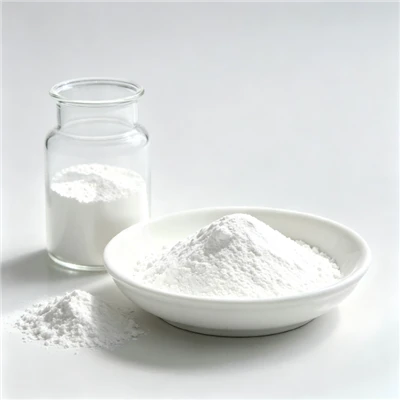
White crystalline powder. Not a hazardous substance or mixture.
2.2 GHS classification
According to the General Rules for Classification and Hazard Communication of Chemicals (GB 13690-2009) and the relevant standards for classification, labeling and precautionary statements of chemicals:
• Physical hazards: Not classified.
• Health hazards: Not classified.
Skin corrosion/irritation: Not classified.
Serious eye damage/eye irritation: Not classified.
Specific target organ toxicity – repeated exposure: Not classified.
• Environmental hazards: Not classified.
2.3 Label elements
• Pictograms: None required.
• Signal word: No signal word.
• Hazard statements:
• None required (the substance/mixture is not classified as hazardous).
• Precautionary statements – Prevention:
• P260 Do not breathe dust/fume.
• P264 Wash hands thoroughly after handling.
• P270 Do not eat, drink or smoke when using this product.
• P280 Wear protective gloves/protective clothing/eye protection/face protection.
• Precautionary statements – Response:
• P304+P340 IF INHALED: Remove person to fresh air and keep comfortable for breathing.
• P312 Call a POISON CENTER/doctor if you feel unwell.
• P302+P352 IF ON SKIN: Wash with plenty of water.
• P332+P313 If skin irritation occurs: Get medical advice/attention.
• P362+P364 Take off contaminated clothing and wash it before reuse.
• P305+P351+P338 IF IN EYES: Rinse cautiously with water for several minutes. Remove contact lenses, if present and easy to do. Continue rinsing.
• P337+P313 If eye irritation persists: Get medical advice/attention.
• P301+P312 IF SWALLOWED: Call a POISON CENTER/doctor if you feel unwell.
• P330 Rinse mouth.
• P314 Get medical advice/attention if you feel unwell.
• Precautionary statements – Storage: No special requirements. Store in a cool, dry and well-ventilated place.
• Precautionary statements – Disposal: P501 Dispose of contents/container in accordance with local/national regulations.
2.4 Other information
Physical and chemical hazards: No classification required based on available information.
Health hazards: Prolonged or repeated contact may cause skin sensitization. May damage or irritate the eyes. Harmful if inhaled or swallowed.
Environmental hazards: Dust generation and water pollution effects, but not toxic to aquatic organisms.
Other hazards: No relevant information.
SECTION 3: Composition/Information on Ingredients
Substance ( ) Mixture (√)
|
Component name |
CAS No. |
Weight (%) |
|
Titanium dioxide |
13463-67-7 |
94.0 – 96.0 |
|
Aluminium oxide |
1344-28-1 |
2.5 – 4.0 |
|
Zirconium oxide |
1314-23-4 |
0.1 – 1.0 |
|
Trimethylolpropane |
77-99-6 |
0.1 – 1.0 |
SECTION 4: First Aid Measures
If the product causes harm to human health during use, consult a physician or a professional. Specific measures are as follows:
• Inhalation: Remove the person to fresh air and get medical attention.
• Skin contact: If contacted, immediately flush with plenty of water.
• Eye contact: Rinse with water or saline. If irritation occurs and persists, get medical attention.
• Ingestion: Do not induce vomiting. Get medical attention. Rinse mouth thoroughly with water.
Acute effects: Irritant effects.
Delayed effects: No relevant information.
Protection of first aiders: Use appropriate protective equipment in case of possible exposure (see Section 8).
Notes to physician: Treat symptomatically.
SECTION 5: Firefighting Measures
Suitable extinguishing media: Will not burn; no specific requirements for extinguishing media. Use media appropriate to the surrounding fire.
Unsuitable extinguishing media: None known.
Special hazards arising from the substance: No specific fire or explosion characteristics. Hazardous combustion products: metal oxides.
5.1 Firefighting precautions and protective measures
Small fire: Use extinguishing media appropriate to the surrounding fire, e.g. dry powder, CO2 or water fog.
Large fire: Use dry powder, CO2 or water fog to extinguish. Move containers from the fire area if safe to do so.
Special firefighting methods: None.
Protective equipment for firefighters: Firefighters should wear self-contained breathing apparatus and protective firefighting clothing.
SECTION 6: Accidental Release Measures
6.1 Personal precautions, protective equipment and emergency procedures
Personal protective equipment: refer to Section 8.
Emergency procedures: Wear self-contained breathing apparatus and other suitable personal protective equipment. Avoid dust generation. Do not touch or walk through spilled material.
6.2 Environmental precautions
Do not allow the product to be released into the environment. Comply with local and national laws and regulations.
6.3 Methods and material for containment and cleaning up
Sweep up the spill and collect it in a suitable container pending disposal. Materials and articles used for the containment, clean-up and disposal of the released material shall be in accordance with local or national regulations.
SECTION 7: Handling and Storage
7.1 Handling
Handle in closed systems with local exhaust ventilation. Do not swallow; avoid contact with eyes; avoid prolonged or repeated contact with skin. Operators are recommended to wear a self-priming filter dust mask, safety goggles and general work protective gloves. Avoid dust generation. Avoid contact with acids. Handle with care to avoid damage to packaging. Provide spill emergency response equipment. Empty containers may retain hazardous residues.
7.2 Storage
Conditions for safe storage: Store in a cool and ventilated warehouse. Keep away from ignition sources and heat. Store separately from acids; do not store together. The storage area should be provided with suitable materials to contain leaks.
Incompatible materials: Acids.
Packaging materials: Keep in the original, tightly closed packaging.
Other information: The warehouse should be equipped with appropriate spill collection equipment and fire-fighting equipment.
SECTION 8: Exposure Controls/Personal Protection
8.1 Occupational exposure limits
|
Chemical name |
MAC (mg/m³) |
PC-TWA (mg/m³) |
PC-STEL (mg/m³) |
ACGIH TLV- TWA (mg/m³) |
|
Titanium dioxide (CAS: 13463-67-7); G2B – suspected human carcinogen |
- |
8 (total dust, CN OEL) |
- |
2.5 (respirable dust, ACGIH) |
(Reference standard: GBZ 2.1-2019)
Monitoring methods: No relevant information.
Biological limit values: No relevant data.
8.2 Engineering controls
Engineering controls: Closed operation with local exhaust ventilation; minimize workplace exposure concentrations as far as possible.
8.3 Personal protective equipment (for operators)
• Hand protection: Wear general work protective gloves.

• Eye protection: Wear chemical safety goggles.

• Respiratory protection: When dust concentrations in air are high, wear a self-priming filter dust mask.

• Body protection: Wear general work protective clothing; avoid skin contact and wash after contact.

General hygiene measures: Change and wash work clothes promptly; observe good personal hygiene.
SECTION 9: Physical and Chemical Properties
|
Property |
Value |
|
Appearance |
White crystalline powder |
|
Colour |
White |
|
Odour |
Odourless |
|
pH |
5.5 – 9.5 (100 g/l at 20 °C) |
|
Boiling point/range |
3000 °C |
|
Melting point/range |
1843 °C |
|
Flash point |
Not applicable |
|
Flammability/explosion limits – lower (% v/v) |
Not applicable |
|
Flammability/explosion limits – upper (% v/v) |
Not applicable |
|
Relative density |
3.9 – 4.3 (water = 1) |
|
Vapour pressure |
No data available |
|
Relative vapour density |
No data available |
|
Solubility |
Insoluble in water |
|
n-Octanol/water partition coefficient |
No data available |
|
Auto-ignition temperature |
Not applicable |
|
Decomposition temperature |
Not applicable |
|
Odour threshold |
No data available |
|
Evaporation rate |
No data available |
|
Viscosity |
No data available |
|
Particle characteristics |
Non-nano particles |
|
Flammability (solid, gas) |
Non-flammable |
SECTION 10: Stability and Reactivity
Stability: Chemically stable.
Hazardous reactions: None.
Conditions to avoid: None.
Materials to avoid: None.
Hazardous decomposition products: None.
SECTION 11: Toxicological Information
11.1 Toxicity data of the product
|
Component |
CAS No. |
LD₅₀/LC₅₀ |
|
Titanium dioxide |
13463-67-7 |
Acute oral toxicity LD50: > 5,000 mg/kg (rat) (OECD 425) |
|
Titanium dioxide |
13463-67-7 |
Acute inhalation toxicity LC50: > 6.82 mg/l (dust/mist, rat, 4 h) |
|
Titanium dioxide |
13463-67-7 |
Acute dermal toxicity, acute toxicity estimate (ATE): > 2,000 mg/kg (rat) |
|
Component |
CAS No. |
LD₅₀/LC₅₀ |
|
Titanium dioxide |
13463-67-7 |
Acute toxicity (oral) LD50: > 5,000 mg/kg (rat) (OECD 425) |
11.2 Classification of the product as a whole
|
Endpoint |
Classification |
|
Acute toxicity (oral) |
Not classified |
|
Skin corrosion/irritation |
Not classified |
|
Serious eye damage/eye irritation |
Not classified |
|
Respiratory sensitization |
Not classified |
|
Skin sensitization |
Not classified |
|
Germ cell mutagenicity |
Not classified |
|
Carcinogenicity |
Not classified |
|
Reproductive toxicity |
Not classified |
|
Specific target organ toxicity – single exposure |
Not classified |
|
Specific target organ toxicity – repeated exposure |
Not classified |
|
Aspiration hazard |
Not classified |
|
Effects on or via lactation |
Not classified |
|
Toxicokinetics, metabolism and distribution |
No data available |
|
Other health hazards |
Prolonged or repeated contact may cause skin sensitization; dust may damage or irritate the eyes; harmful if inhaled or swallowed. |
SECTION 12: Ecological Information
Ecotoxicity: Unorganized releases may cause dust effects on the environment; not toxic to aquatic organisms.
Persistence and degradability: Component trimethylolpropane - result: not readily biodegradable; biodegradability: 6 %; exposure time: 28 days.
Bioaccumulative potential: Component titanium dioxide - bioaccumulation, species: Oncorhynchus mykiss (rainbow trout), bioconcentration factor (BCF): 352. Component trimethylolpropane - n-octanol/water partition coefficient: log Pow: -0.47.
Product as a whole: Not classified.
Mobility in soil: No data available.
Other adverse environmental effects: No data available.
Other information: No data available.
SECTION 13: Disposal Considerations
Disposal methods:
• Residues: Do not discharge waste water into sewers. Dispose of in accordance with relevant national and local regulations.
• Contaminated containers and packaging: Containers or packaging should be sent to a licensed waste disposal facility for recycling or disposal.
Disposal precautions: Do not dispose of into sewers. Do not dispose of into water bodies. Physical-chemical treatment is recommended for waste disposal.
SECTION 14: Transport Information
DOT / IATA / ICAO / IMO / IMDG
Proper shipping name: Not applicable.
|
UN No. |
Hazard class |
Subsidiary risk |
Packing group |
Marine pollutant |
EMS |
|
Not applicable |
Not applicable |
Not applicable |
Not applicable |
No |
Not applicable |
Packing marks: Not applicable.
Special precautions: Before transport, check that packaging is complete and the load is secure. During transport, ensure containers do not leak, collapse, fall or become damaged. Do not mix with acids. Protect from sunlight, rain and high temperature during transport.
SECTION 15: Regulatory Information
15.1 Domestic regulations
General Rules for Classification and Hazard Communication of Chemicals (GB 13690-2009): Not classified. This product is not a hazardous chemical.
Classification and packaging of dangerous goods for transport (GB/T 15098-2008): Not applicable.
List of Dangerous Goods (GB 12268-2012): Not applicable (UN No.: not applicable; the product is not a dangerous good).
Catalogue of Hazardous Chemicals (2015 Edition): This product is not a hazardous chemical. Please comply with the Regulations on the Safe Use of Chemicals in the Workplace and other local regulations.
Law of the People's Republic of China on Work Safety: Provisions on safe production and operation, emergency handling of accidents and legal liability shall be complied with.
Law of the People's Republic of China on Prevention and Control of Occupational Diseases: Provisions on preliminary prevention, protection and management during work, and diagnosis of occupational diseases may be referenced.
Environmental Protection Law of the People's Republic of China: Comply with relevant provisions in preventing and controlling environmental pollution.
15.2 International regulations
TSCA – Toxic Substances Control Act:
|
Component name |
CAS No. |
TSCA Inventory |
|
Titanium dioxide |
13463-67-7 |
Listed |
(EC) 1272/2008 Annex VI Table 3.1: Not applicable (component, classification and hazard code all not applicable).
Clean Water Act (CWA): Not applicable (reportable quantity, hazardous substance, priority pollutants and toxic pollutants all not applicable).
Carcinogenicity-related regulations: Titanium dioxide is classified by IARC as Group 2B (possibly carcinogenic to humans) and by ACGIH as A4 (not classifiable as a human carcinogen); not classified under GHS in this SDS.
SECTION 16: Other Information
16.1 Disclaimer
The information above is provided for reference only and is believed to be true and reliable. The company does not control the manner of use by others and assumes no responsibility for any consequences arising therefrom. The user should decide how to properly use this product or adopt production methods for particular purposes. Following the above precautions helps to avoid hazards to property and personal safety that may arise during handling and use.
16.2 References
GB/T 16483-2008, GB 13690-2009, GB/T 15098-2008, GB 12268-2012, GB/T 17519-2013, GB 30000.2-2013 ~ 30000.29-2013, Catalogue of Hazardous Chemicals (2015 Edition), and other regulatory documents.
16.3 Abbreviations
GHS – Globally Harmonized System of Classification and Labelling of Chemicals;
CAS – Chemical Abstracts Service;
EINECS – European Inventory of Existing Commercial Chemical Substances;
ACGIH – American Conference of Governmental Industrial Hygienists;
OSHA – Occupational Safety and Health Administration;
IARC – International Agency for Research on Cancer;
IMO – International Maritime Organization;
IMDG – International Maritime Dangerous Goods;
IATA – International Air Transport Association;
ICAO – International Civil Aviation Organization;
TSCA – Toxic Substances Control Act;
ECHA – European Chemicals Agency;
NITE-CHRIP – Japan National Institute of Technology and Evaluation – Chemical Risk Information Platform.
16.4 Document information
|
Item |
Details |
|
Latest SDS revision date |
02 March 2026 (previous revision: 10 March 2025; first issue: 04 September 2026) |
|
SDS version |
6.0 |
|
SDS prepared by |
Shanghai Dingwujin Chemical Co., Ltd. |
|
Address |
No. 12, Lane 199, Yefan Road, Yexie Town, Songjiang District, Shanghai, China |
|
Website |
www.dwjchem.com |
|
Telephone |
+86 158 4002 8423 |
|
|
dwjchem@dwjchem.com |
Titanium Dioxide COA
Certificate of Analysis
|
Report No.: HT/DWJ01-052 |
|||
|
Product Name |
Titanium Dioxide Pigment |
Grade |
DWJ-223 |
|
Batch No. |
10027 |
Packing Size |
25kg/bag |
|
Serial No. |
DWJ1023-09 |
Quantity (Ton) |
48.0000 |
|
CAS Number |
13463-67-7 |
Issuing Date |
2026.10.23 |
|
Test Result |
|||
|
ITEM |
SPECIFICATION |
RESULT |
|
|
TiO2 Mass Fraction (%) |
≥93.0 (QJ/YBTY.0902.157-2020) |
94.8 |
|
|
Rutile Ratio (%) |
≥99.8 (QJ/YBTY.0902.159-2020) |
99.9 |
|
|
CBU |
≥12.0 (QJ/YBTY.0902.156-2020) |
13.9 |
|
|
TCS |
-- |
100.0 |
|
|
105℃ Volatile (%) |
≤0.5 (GB/T 5211.3-2020) |
0.3 |
|
|
Oil Absorption (g/100g) |
≤20.0 (GB/T 5211.15-2014) |
16.0 |
|
|
L* |
≥98.0 (QJ/YBTYHT.0902.034-2025) |
98.4 |
|
|
a* |
(-0.7)±0.2 (QJ/YBTYHT.0902.034-2025) |
-0.8 |
|
|
b* |
1.4-2.0 (QJ/YBTYHT.0902.034-2025) |
1.8 |
|
|
Aqueous Suspension pH |
6.0-8.5 (QJ/YBTYHT.0902.048-2025) |
7.0 |
|
|
Resistivity of Aqueous Extract (Ω·m) |
≥80 (GB/T 5211.12-2007) |
207 |
|
|
45 μm Sieve Residue (%) |
≤0.01 (GB/T 5211.18-2015) |
0.01 |
|
|
High Shear Dispersion (μm) |
-- (QJ/YBTY.0902.179-2020) |
25 |
|
|
Remarks: |
|||
|
Test Conclusion: Qualified. |
|||